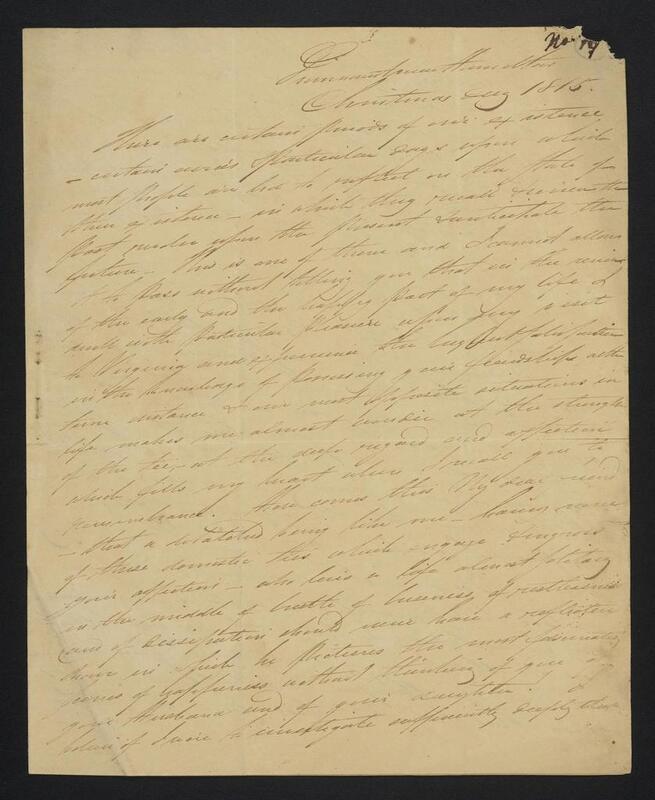
Karl Philipp, Prince of Schwarzenberg, 1771-1820
Karl Philipp, Furst zu Schwarzenberg was born on either the 18th or 19th of April, 1771 in Vienna, Austria to Johann Nepomuk Anton of Schwarzenberg and Marie Eleanore, Countess of Ottingen-Wallerstein. He was given extensive military training from an early age and joined the Austrian army as a lieutenant in 1788, going to war that same year against the Ottoman Empire. He was rewarded for his bravery and promoted to major in the cavalry, after which he campaigned in the Balkans. During the French Revolutionary War, Karl Philipp served as part of the advanced guard against the French and at the battle of Le Cateau-Cambresis in 1794, he led a charge of his regiment that was supported by a dozen British squadrons and broke a corps of around 25K French, killing and wounding 3,000 and capturing thirty-two of the enemy’s guns. He was decorated with the Knight’s Cross of the Military Order of Maria Theresa for his actions. Later, he was promoted to major-general and eventually, generalleutenant. At the Battle of Hohenlinden, under the command of Archduke John of Austria, it was believed that the French were beaten, but they ambushed the Austrian troops as they were coming out of the Ebersberg forest, leading to an almost disastrous defeat. However, Karl Philipp led a division on the right wing of the army and kept them from being completely destroyed, after which Archduke Charles of Austria entrusted him with the command of the rearguard. In 1804, Prince Karl Philipp was created Furst zu Schwarzenberg, a title that was both like and separate from his brother, Joseph, Prince of Schwarzenberg. During the Napoleonic Wars, Karl Philipp was once again in many of the great battles, defeating Napoleon at the Battle of Aspern-Essling and losing at the Battle of Wagram. In 1812, now General of the Cavalry, Prince Karl Philipp signed the Treaty of Paris. As Austrian Ambassador to France, he also negotiated Napoleon’s marriage to Austrian emperor Francis I’s daughter, Marie-Louise. However, after Napoleon’s disastrous attempt at taking Russia, Karl Philipp went back to Austria and in August 1813, was appointed Commander in Chief of the Allied Forces of Austria against Napoleon. He, along with Emperor Alexander I of Russia, Emperor Francis of Austria, and Fredrich Wilhelm III of Prussia, played a major role in Napoleon’s decisive defeat at the Battle of Leipzig, also known as “The Battle of Nations” on October 16-18, 1813. Invading France in 1814, Karl Philipp, together with Gebhard Leberecht von Blucher and Barclay de Tolly and their armies, besieged the city of Paris on March 26, 1814 and Paris was surrendered on March 31, 1814. Later, after Napoleon had escaped Elba, regained his throne, and then was defeated at Waterloo by Wellington and Blucher in June of 1815, Karl Philip returned home. He had a stroke in 1817 which left him partially paralyzed and then a second on October 15, 1820, which ended in his death. He was married to Countess Maria Anna von Hohenfeld and they had three sons. His line of the Schwarzenberg family continues today in the Czech Republic and still holds the lands and the castle of Schwarzenberg.
Mentioned in these documents