Eyre, Ann Matilda Upshur, 1780-1829
Ann Matilda Upshur was the first-born child of Abel Upshur II and Elizabeth Gore. She was born on October 4, 1780, at Warwick, a brick house on the long, narrow peninsula owned by her family called Upshur Neck in Accomack County.[1] She had two younger siblings, Elizabeth Ann, who was also called “Betsy,” and Arthur Upshur. Her father died shortly after Ann’s brother was born in 1790. As Abel Upshur II died intestate, his holdings were divided equally among his three children and Ann, being the eldest, inherited the “northern third of Upshur’s Neck, including the homeplace, ‘Warwick.’”[2] Two years later, her mother was remarried to a second cousin named John Upshur who owned the Brownsville estate, but sadly, the marriage did not last long as Elizabeth Gore Upshur died two years after that in 1794. By this time, Ann and her sister were in Philadelphia at Valeria Spencer Fullerton’s boarding school being educated as proper young ladies of quality. Both Ann and Elizabeth were very intelligent and well read, but Ann showed a propensity toward music that continued throughout her life.
Explore her family tree on MilesFiles.
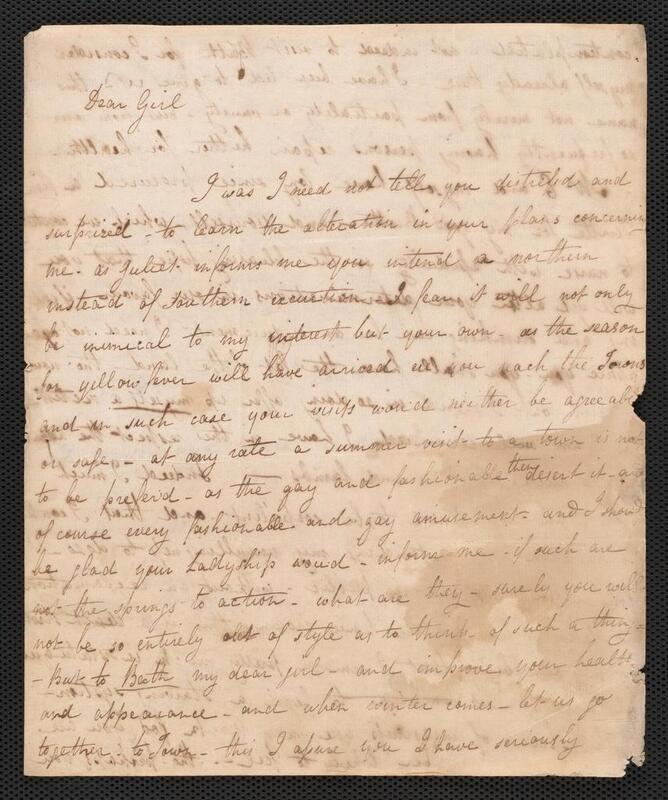
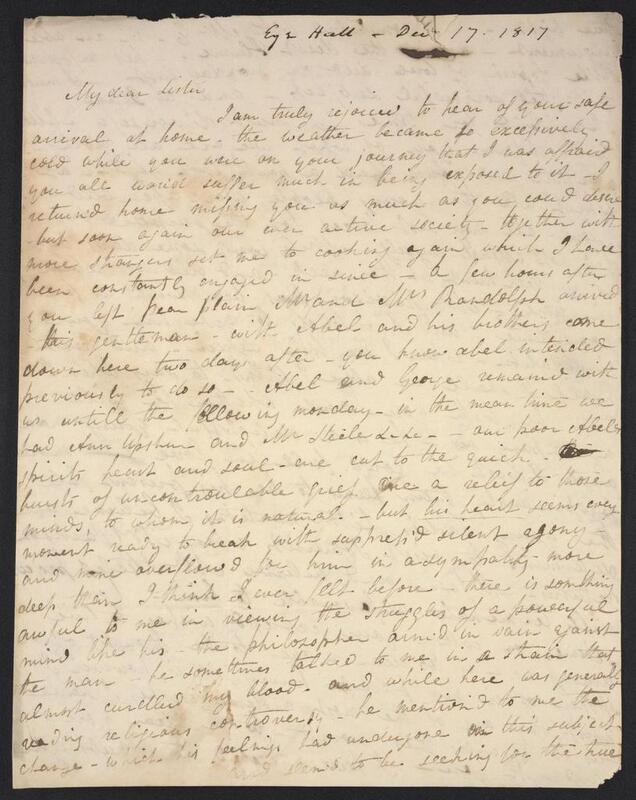
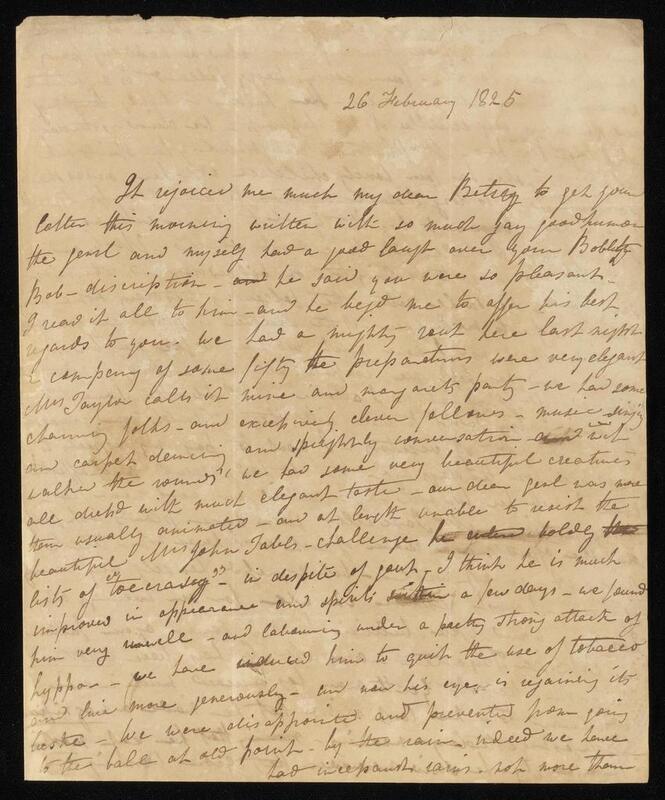
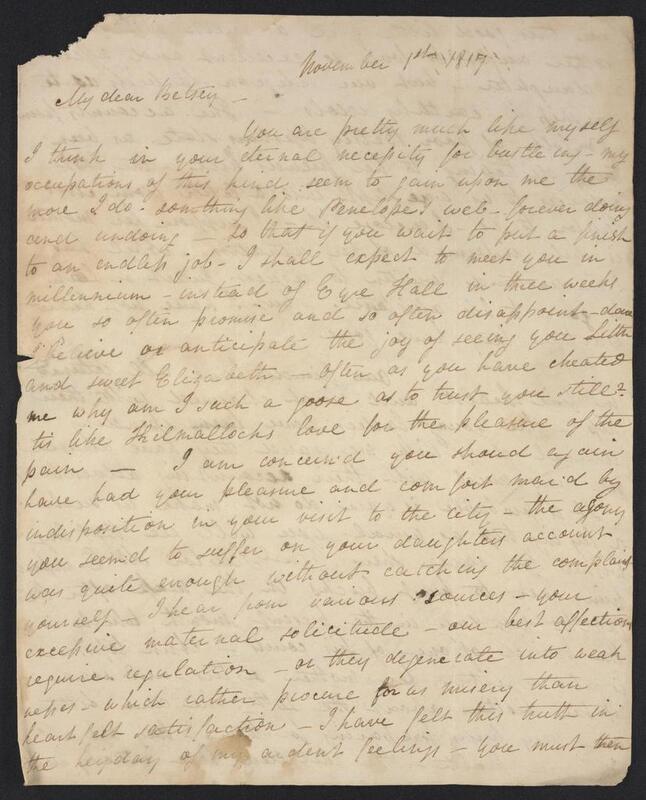
Ann was a well-educated, well-spoken, generous hostess who welcomed guests from all over the Eastern Shore and beyond. She was considered a gem in the center of the genteel society of the Eastern Shore and was often found in the company of or visited by the social and political elite of the day. Her reputation for kindness and humor lived on well after her passing. Ann was a trained musician with a deep appreciation of all types of music and musical instruments. She could both read and copy the music that she collected. It is unknown if she attempted to write any songs of her own. Ann and her sister, Elizabeth, were educated in proper deportment, Classical Literature and Mythology, History, writing, and natural sciences. However, the two of them were also well versed in politics and the ebb and flow of societal changes, which shows in their letters to one another. Her love of literature also shows in the number and style of books that she collected and read through her life. Ann was as gifted a horticulturalist as she was a musician and it is because of her talents and understanding of nature, plants, and cultivation that the Gardens of Eyre Hall were, and are to this day, considered among the most beautiful of the Eastern Shore. However, Ann Matilda Upshur also had a temper, a biting wit when she was angry, frustrated, or annoyed, and a headstrong independence that allowed her to completely renovate the gardens of Eyre Hall and reshape them into what she wanted them to be, complete with an orangery and a greenhouse. Ann was a woman who was aware of the world around her and knew how to navigate it while observing the best and worst of other people. Even more, however, she loved her sister, Elizabeth, and both worried for her and attempted to protect her as much as she could by urging her to come and stay at Eyre Hall as often as possible. It is in this context that one truly sees who Ann was.
In 1795, Ann came down with yellow fever. In her letter to her step-father, John Upshur, dated May 19, 1796, she discusses the possibility of his visit to Philadelphia and that she, herself, would enjoy being in Virginia during the winter, but that she would rather avoid being sick again, since the last time she spent the summer on the Eastern Shore, she returned to Philadelphia “the ague and fever had left me its saffron colour without a prospect of its being soon remov'd.” Within this same letter, she encouraged her stepfather to remarry, which he did twice more.[3]
By the end of the 1790’s, Ann and Elizabeth concluded their educations and moved back to the Eastern Shore where they began to move through society as the young belles of good family that they were. Though there were some new families in the area, most of the families that they were in contact with had been in the area for generations and were all intermingled by marriage. These local gentry were also the political and social powerhouses of the Eastern Shore and they determined the representatives to the government for the area, as well as the dominant business dealings and social hierarchies. The young sisters, considered to be beauties, were extended invitations to house parties, balls, and long visitations throughout the region, where they would be in contact with and introduced to eligible beaux. It was in this atmosphere that Ann was introduced to John Eyre.
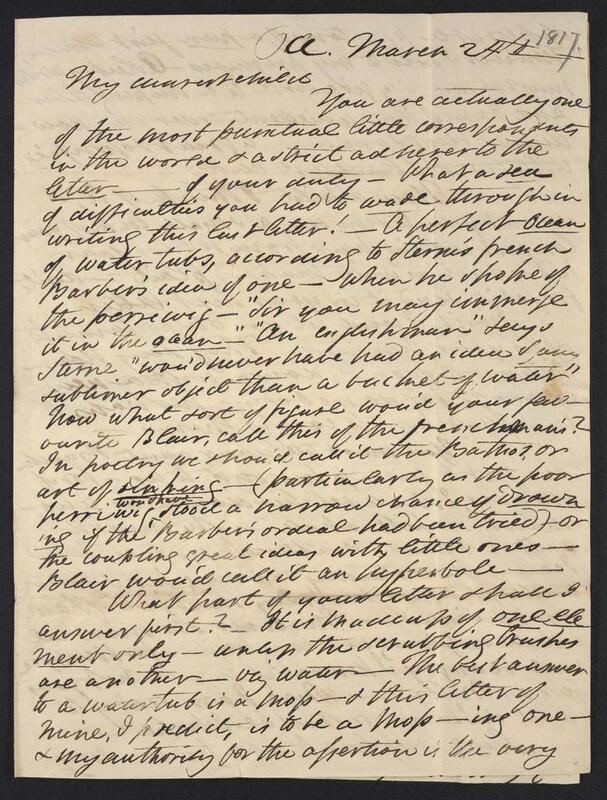
In the summer of 1798, Ann was visiting Col. Custis Kendall and his wife, Susanna Gore Kendall, Ann’s mother’s younger sister, when she broke her leg in an accident and was unable to travel for several weeks. During her convalescence, Col. Kendall negotiated to sell a property he owned just north of Eyre Hall to William Eyre, as the home that he and his wife now lived in was just a few miles south of Brownsville, where Ann’s stepfather lived. On one of the visits that John Eyre made during the negotiations for the sale of the property, he met Ann and became “infatuated with her charm.” Even with the significant age difference, as John was 30 and Ann was not yet 18, it seemed like they were a match destined to be made.[4] In a note dated June 16, 1798, John Eyre wrote to Ann’s sister, Elizabeth, to both inquire about how she was doing and to offer any services or items that could be brought to make her time being immobile and confined to the Kendall house more tolerable, including books. Years later, on October 1, 1829, shortly after Ann’s death, Elizabeth wrote a note of her own on this note by John Eyre stating that this “might be said to be the beginning of Mr. Eyre’s attachment to her.” Both the original note and Elizabeth’s later comment show that the relationship between Ann and her chosen beaux, John Eyre, was one of both chance and, seemingly, love at first meeting.[5]
John courted Ann not only with books and music, but with conversation and by appealing to her intelligence and social acuity. Ann was described as:
one of the most gifted ladies of her day; talented, highly educated, witty and fluent in conversation, and moreover an exquisite musician, so that with qualities of heart commensurate with these endowments, it is not strange she should have been the centre of a brilliant and admiring circle.[6]
Therefore, it is no wonder that he became enamored with Ann and his reported elegant manners, kindness, and distinguished countenance obviously won the lady’s heart, because a year and a half after their initial introduction, on February 24, 1800, in Northampton County, Virginia, Ann Upshur married John Eyre.
After taking up residence at Eyre Hall, Ann and John began to make improvements and to expand upon the house. John Eyre’s remaining siblings, Margaret (Peggy), Sarah (Sally), and William, left Eyre Hall as they built lives of their own with their spouses, but his mother, Margaret, remained in the household with the couple until her death in 1812. With so few people in residence, it was much easier for Ann and John to make the changes and improvements to Eyre Hall that they wanted, as Ann enjoyed company and loved to entertain, and John liked to surround himself with fashionable and lavish accessories for the house. The renovations and additions included an expanded dining hall that ended next to the housekeeper's quarters and additional storage areas, as well as the addition of a second floor above. There was also a drawing-room, where, in later years, a family friend, Mr. James Marshall, was said to have "presided over the destinies of all the musical instruments of the establishment." This drawing-room contained several instruments, including a fiddle, flutes, a guitar, and a pianoforte that Ann brought with her into the marriage, one that she'd likely had since a young girl when she first started learning to play. Later, after 1806, “a large and finely made hand-cranked barrel organ from London” joined the collection so that there would be music to sing or dance to, even if there was no one to play it.[7] She was a well-regarded hostess among the families of the Shore and it was said that when people visited the area, they did not consider their visit complete if it did not include an invitation to Eyre Hall.[8]
Ann’s second passion at Eyre Hall was the gardens, which are famous to this day. When Ann moved to Eyre Hall, not only was the house renovated and expanded, so were the gardens and outbuildings. The updating of the dairy and other outbuildings, to include the enslaved quarters, which was demolished in 1956, as well as the addition of a smokehouse and a greenhouse added to the quality and luster of Eyre Hall. But, Ann was quite the horticulturist. She wrote people that were known to have exotic and unique plants and ask for seeds and cuttings from their gardens. This is shown in a letter that she wrote to John McHenry in April of 1819, when she asked him for cuttings from his “handsome collection” and since she “didn’t have room for a large collection” herself, she would “prefer only such as are most valuable” to be sent from his trimmings and pruning.[9] However, she wasn’t stingy in sharing her seeds and cuttings, either, and would often give extras to others who asked for them, as shown in the letter she wrote to her sister, Elizabeth, dated May 9, 1805. In this letter, Ann mentions a “new created cousin” Mrs. Dennis (Elinor “Nelly” Jackson Dennis) had asked for a “peck” of flower seeds. However, Ann states that they are not forgotten, but that Mrs. Dennis will have to be patient because the seeds have to be “sufficiently ripe to save” and that even if she had them at the moment it was “entirely out of the proper time to sow them.” Even more, Ann writes that if Mrs. Dennis wants an entire “peck” of wall flower seeds, the “best method to obtain them will be to come down and help me,” meaning that Ann loved to have company and the ability to show off her gardens.[10]
Since Ann did not have any children of her own, she threw herself into creating a beautiful world at Eyre Hall where extended family and friends could come and stay for long visits, something she wrote her sister, Elizabeth about often, as shown in this example from a letter dated September 22, 1806:
The party from Norfolk were expected every hour when I arrived at home, but we soon received letters that most of them were prevented by the lateness of the season and particular business from honoring us with their presence. Mr. R.B. Taylor, my particular favorite, with his family are expected at Eyre Hall on Thursday next. And I trust that at that time, or before, or soon after, I may experience the delight of embracing my most-loved and darling girl and her sweet offspring. Expectation is also on tiptoe for Mr. Tilghman, Mr. Morris, Mr. Jones, etc. etc. etc.[11]
The constant flow of people in and around Eyre Hall, as well as Ann’s attention to her music collection, library, and gardens, combined to make her life full and busy. However, as full and busy as it was, it did not take away the loneliness of not having her sister, Elizabeth, with her as often as she would like, though their letters show that they were very close and remained one another’s confidant throughout their lives.
In a letter dated May 9, 1805, Ann writes to Elizabeth about the weddings and guests that are coming up on the social calendar and about the generous crop of strawberries that her garden produced that season and wished that her sister was there to enjoy them with her. However, she promises Elizabeth “plenty of cherries” for the time of a proposed visit, for which Ann admonishes, “In the name of Mercy, I implore you and my dear brother (Littleton Dennis Teackle) not to disappoint my hopes of seeing you, and my beloved Elizabeth (Elizabeth Ann Upshur Teackle, Elizabeth and Littleton’s only surviving daughter.)”[12] Ann seems to keep the tone of this letter light and cheerful, but there is an undercurrent of worry that illustrates the closeness and intimacy of the sisters, as she also mentions that she had left Elizabeth’s home not long before and that she would be “uneasy till I hear you are in better health and spirits than you were when I left you.”[13] Ann had gone to Princess Anne to be with her sister when Elizabeth’s latest pregnancy had resulted in a stillborn son. Elizabeth confided in Ann through her own letters that she had at least fourteen “laying-ins” throughout the first decade of her marriage, of which all but two resulted in miscarriages and only one in a live birth.[14] There is no mention, however, of whether or not Ann suffered the same affliction as her younger sister, since neither of them spoke of whether she was ever pregnant.
However, Ann did get the opportunity to raise children despite not having any of her own. When her husband’s brother, William Eyre of Eyreville, died in 1808 and his wife, Grace Duncombe Taylor Eyre followed in 1809, Ann and John became the guardians of the three young surviving children, Sarah, Emily, and William. Not long after, John’s brother-in-law, Dr. James Lyon, died in 1811 and John’s sister, Sally (Sarah,) followed in 1813, leaving behind their two young children, Margaret and William. Ann took care of the children as if they were her own, mentioning them in her letters to Elizabeth. Having a house full of people made Ann happy and she would write to her sister that if she wouldn’t come and visit, herself, then she should send her daughter, Elizabeth Ann, to her aunt instead. But there was a consistent attempt from Ann to convince Elizabeth to come to Northampton County and stay with her, because she knew the physical and financial strain that Elizabeth was constantly under. In the letter dated February 20, 1812, Ann admonishes her sister for not being open and honest with her about her financial situation and for not coming to her when she is in need:
The difficulties you have encountered, tho' you have the heroism to make a jest about them, have nevertheless been the subjects of my constant thoughts since I received your last letter, and under the influence of these and the uncertainty of my brother Litt[leto]n being really at home to supply your wants; I have enclosed you thirty dollars which you and I can settle about, when we meet. I already owe you three or four on account of the jewelry you had done for me. If you had been as magnanimous in friendship as you have shown yourself skilled in doing without it, you would not have had the necessity of “raising the wind”. You must have known where you could have applied, with the most perfect propriety, for any assistance of that kind. Then learn my dear girl, how to receive acts of friendship, as well as to confer them. It is in my opinion no proof of a well organized mind to be above these reciprocities. My means and yours have always been a common stock from our earliest years, and I am sure, our claims upon each other are no way lessen'd that I know of.[15]
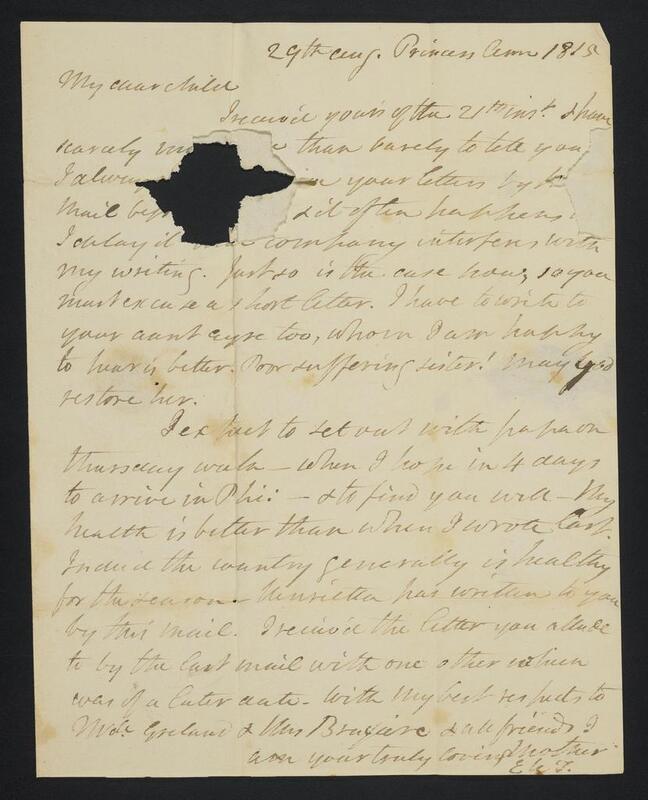
Ann was known to be a generous and caring person, especially when it came to her family. Knowing that Littleton Teackle’s business ventures were often hit or miss, Ann gifted Elizabeth with dresses, money, cloth, or other things in an attempt to make her life easier. As Ann’s husband, John, was adept with investments and finances, which made the Eyres very wealthy, even during the tensions before and during the War of 1812, she seemed to feel it was her familial obligation to take care of her family, in general, and her sister, in particular. One of the many ways that she managed to feed money to her sister, without stepping on her dignity, was to commission her to buy materials and make things for her. In a letter dated June 18, 1815, Elizabeth Upshur Teackle discusses the money that she has received from Ann, the items that she has been making for her, how she is procuring some of the supplies needed to make them, and how much each item costs. There is a bill of sale written at the end of the letter that gives a detailed inventory, but what this letter shows is that Ann was conscious of her sister’s need for financial help, but also wanted to preserve her sense of self-respect and pride.[16]
Ann Eyre entertained, was surrounded by, and was friends and acquaintances with many of the powerful and well-to-do among Colonial Eastern Shore families and others. This is not surprising, as the Eyre, Teackle, Upshur, Dennis, Kendall, Savage, Wilson, and Bowdoin families – to name a few – were and are interconnected through marriages since the settling of Virginia. However, Ann was also often in contact with other well-known people who had an impact on American History. In a letter dated October 30, 1824, Ann details the events that she was involved in and witnessed during the visit of Gilbert Du Motier, Marquis de Lafayette during his Grande Tour of the United States, after being invited by President James Monroe in part to celebrate the upcoming 50th Anniversary of the signing of the Declaration of Independence.[17] During this adventure, Ann and her husband, John, went to both York and Norfolk with other prominent families.[18]
In this letter about Lafayette’s time in Virginia, Ann shares vivid imagery in her writing of the people, the clothing, the decorations, the transportation, the food, and the accommodations that she both saw and that was made available to her. She discusses the prominent people who were there that she spoke with, dined with, and was in contact with, such as General Robert Barraud Taylor, who was the brother of John Eyre’s sister-in-law, Grace Taylor Eyre, Senator William Maxwell, General Alexander Macomb, and John C. Calhoun, then Secretary of War under President Madison, to name a few. She describes the boat trip to the encampment set up for Lafayette near York in celebration, how it was illuminated by candles that had been part of the military stores from the Siege of Yorktown, the constant fireworks, riding from the encampment to York in Lafayette’s barouche and being seated next to John C. Calhoun at dinner, just one seat from the guest of honor, Lafayette, himself, a place of distinguishment not lost on her. She also points out her own personal interaction with Lafayette as a high point of the event. She had brought with her, in a large glass dish, what she called “over a gallon, I think, of fine raspberries” that were served at the “grand dinner” and she said that “it was announced at the table from whence they came.”[19] Ann states that she had the distinguished honor of having both of her hands pressed by Lafayette, who was very much a celebrity of the time, and she says that he stated: “I am very much obliged to you” repeatedly.[20] Just this simple interaction and the fact that the Eyres were central to this event at all shows that she was among the elite of the Eastern Shore and Colonial families.
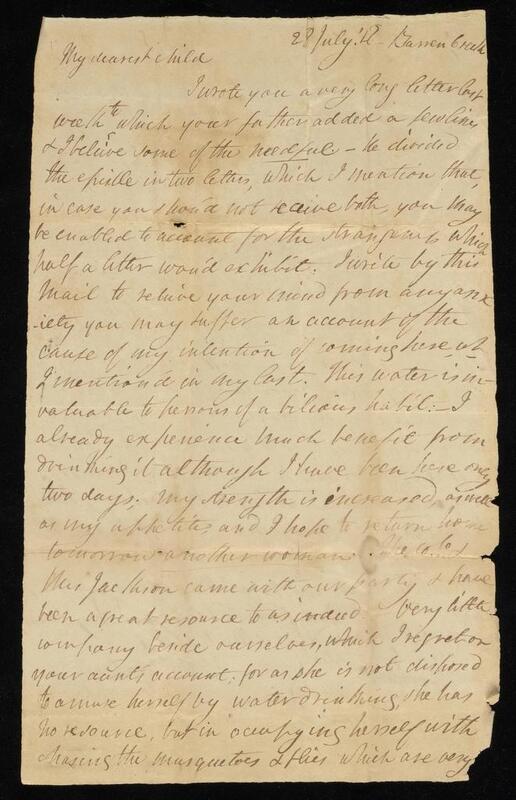
This was not, however, the only one of Ann’s adventures. She travelled often to Baltimore to visit her sister and up to Philadelphia and sometimes New York to visit relatives and friends. Sometimes she would go to places like Bedford Springs, York Springs, or Barren Creek Springs (located in what is now Mardela Springs, MD) to “take the waters” in hopes of becoming healthier.[21] In a letter dated September 9, 1828, Ann writes to her sister about the long tour that she and her husband, John, took to Niagara. Here she discusses the different modes of travel through canals, over part of Lake Erie, and to Albany, with ferries, boats, and carriages, but more important are her observations of the growth of towns and cities, industry, wealth, and population throughout the original colonial states. She even discusses the presence of a Columbian government official at the Falls and describes him and the honors he wore while there.[22] This, like her other letters and the letters of her sister, Elizabeth, show that while they could not participate in the political or economic realm the way that the men in their lives did, Ann was very aware of what was going on around her and was, in her own way, involved in discussion of more than just music, gardening, and society gossip.
After returning home from Niagara, Ann began putting all of her sheet music into bound volumes. She shared her love of music with everyone around her, often copying and circulating the sheet music she owned to family and friends. Several of the pieces in her collection were copied for and sent to her by Elizabeth. In 1829, as her health, which had always been tenuous from the time she had Yellow Fever as a young woman to a long illness sometime between 1815 and 1817, which her sister, Elizabeth, mentions in several letters, seemed to decline. To keep herself busy and to engross herself in her continued passion for music, she began the “process of conversion (including repair, trimming, and mounting damaged pages) of the various musical pieces into bound and indexed volumes that commemorated her lifelong passion.”[23] The volumes went in chronological order of her life, with the first having the music that she brought with her from Philadelphia as a young bride, the second holding the collection of music from journals, operas, and music from overseas, the third has popular music from the era, and the fourth volume holds the music that was written in honor of Lafayette’s grand tour in 1824-25. Sadly, Ann did not get to finish binding all of her music, but her niece, Elizabeth Ann Upshur Teackle (later, Quinby) finished the project for her after her death.[24]
Ann Matilda Upshur Eyre died on June 17, 1829, at the age of 48. Her husband, John, was 61 years old when she died and he lived for another 25 years after, never marrying again. There is no doubt that her sister, Elizabeth, was devastated without her. She is interred at Eyre Hall in the Eyre Family Cemetery where her husband joined her in 1855. Looking at the gardens and the beautiful silver and glassware, musical instruments, and sheet music of Eyre Hall, however, Ann’s legacy lives on.
Footnotes
- ^ The Material World of Eyre Hall: Four Centuries of Chesapeake History. Carl Lounsbury, ed. Maryland Center for History and Culture 2021. 102.
- ^ Upshur, John Andrews. Upshur Family in Virginia. Richmond, Dietz Press. 1955. 44.
- ^ Upshur Eyre, Ann Matilda. “Letter from Ann Upshur Eyre to Her Step-Father John Upshur - May 19, 1796.” Voices of the Eastern Shore. Accessed August 27, 2024. https://voicesoftheeasternshore.org/.
- ^ The Material World of Eyre Hall: Four Centuries of Chesapeake History. Carl Lounsbury, ed. Maryland Center for History and Culture 2021. 102-3.
- ^ Eyre, John. “Letter from John Eyre to Elizabeth Upshur Teackle - June 16, 1798.” Voices of the Eastern Shore. Accessed August 27, 2024. https://voicesoftheeasternshore.org/.
- ^ Fanny Fielding, “Southern Homesteads.” The Land We Love: A Monthly Magazine Devoted to Literature, Military, History, and Agriculture. Vol. III. May-Oct. 1867. Hill, Irwin & Co. Charlotte, N.C. 505.
- ^ The Material World of Eyre Hall: Four Centuries of Chesapeake History. Carl Lounsbury, ed. Maryland Center for History and Culture 2021. 104, 415.
- ^ Fanny Fielding, “Southern Homesteads.” The Land We Love. 505.
- ^ The Material World of Eyre Hall: Four Centuries of Chesapeake History. Carl Lounsbury, ed. Maryland Center for History and Culture 2021. 261.
- ^ Upshur Eyre, Ann Matilda. “Letter from Ann Upshur Eyre to Her Sister, Elizabeth Upshur Teackle – May 9, 1805.” Voices of the Eastern Shore. Accessed September 5, 2024. https://voicesoftheeasternshore.org/.
- ^ Upshur Eyre, Ann Matilda. “Letter from Ann Upshur Eyre to Her Sister, Elizabeth Upshur Teackle – September 22, 1806.” Voices of the Eastern Shore. Accessed September 3, 2024.
- ^ Upshur Eyre, Ann Matilda. “Letter from Ann Upshur Eyre to Her Sister, Elizabeth Upshur Teackle – May 9, 1805.” Voices of the Eastern Shore. Accessed September 5, 2024. https://voicesoftheeasternshore.org/.
- ^ Upshur Eyre, Ann Matilda. “Letter from Ann Upshur Eyre to Her Sister, Elizabeth Upshur Teackle – May 9, 1805.” Voices of the Eastern Shore. Accessed September 5, 2024. https://voicesoftheeasternshore.org/.
- ^ Upshur Teackle, Elizabeth. “Letter from Elizabeth Upshur Teackle to Ann Upshur Eyre - 08 September 1811.” Voices of the Eastern Shore. Accessed September 5, 2024. https://voicesoftheeasternshore.org/.
- ^ Upshur Eyre, Ann Matilda. “Letter from Ann Upshur Eyre to Her Sister, Elizabeth Upshur Teackle – February 20, 1812.” Voices of the Eastern Shore. Accessed September 5, 2024. https://voicesoftheeasternshore.org/.
- ^ Upshur Teackle, Elizabeth. “Letter from Elizabeth Upshur Teackle to Ann Upshur Eyre – June 18, 1815.” Voices of the Eastern Shore. Accessed September 10, 2024.
- ^ Diana Strazdes. “The Transformative Power of Spaces: Rembrandt Peale’s Patriae Pater and Lafayette in Philadelphia” Winterthur Portfolio. Summer/Autumn2022, Vol. 56 Issue 2/3, p95-126.; 1. “Bicentennial of Lafayette’s Visit to Boston,” Boston.gov, August 23, 2024, https://www.boston.gov/news/bicentennial-lafayettes-visit-boston#:~:text=In%201824%2C%20Lafayette%20was%20invited,the%20founding%20of%20the%20nation.
- ^ Upshur Eyre, Ann Matilda. “Letter from Ann Upshur Eyre to Her Sister, Elizabeth Upshur Teackle – October 30, 1824.” Voices of the Eastern Shore. Accessed September 9, 2024.
- ^ Upshur Eyre, Ann Matilda. “Letter from Ann Upshur Eyre to Her Sister, Elizabeth Upshur Teackle – October 30, 1824.” Voices of the Eastern Shore. Accessed September 9, 2024.; The Material World of Eyre Hall: Four Centuries of Chesapeake History. Carl Lounsbury, ed. Maryland Center for History and Culture 2021. 365.: NB: The glass covered bowl that Ann used to transport and gift the “raspberries” is one of the prized possessions of the descendants of Eyre Hall. Carl Lounsbury states in his book on Eyre Hall that “Red Mulberries were the most prevalent in Virginia at the time, but white mulberries were becoming equally abundant…White mulberries are typically in season on the Eastern Shore in late autumn…” (365) However, Ann was a skilled horticulturist and had a greenhouse and an orangery that she grew out of season fruits in and she knew the difference between “raspberries” and “mulberries,” therefore, when she states she gifted “raspberries” that is very likely what she gave.
- ^ Upshur Eyre, Ann Matilda. “Letter from Ann Upshur Eyre to Her Sister, Elizabeth Upshur Teackle – October 30, 1824.” Voices of the Eastern Shore. Accessed September 10, 2024.
- ^ Upshur Teackle, Elizabeth. “Letter from Elizabeth Upshur Teackle to her husband, Littleton Dennis Teackle, July 21, 1812.” Voices of the Eastern Shore. Accessed September 10, 2024.
- ^ Upshur Eyre, Ann Matilda. “Letter from Ann Upshur Eyre to Her Sister, Elizabeth Upshur Teackle – September 9, 1828.” Voices of the Eastern Shore. Accessed September 9, 2024.
- ^ The Material World of Eyre Hall: Four Centuries of Chesapeake History. Carl Lounsbury, ed. Maryland Center for History and Culture 2021. 425.
- ^ The Material World of Eyre Hall: Four Centuries of Chesapeake History. Carl Lounsbury, ed. Maryland Center for History and Culture 2021. 425.
Mentioned in these documents
[Commonplace Book of Elizabeth Upshur Teackle, 1808-1862]
[Letter from Abel Parker Upshur to his cousin, Elizabeth Upshur Teackle, December 23, 1815]

[Letter from Andrew D. Campbell of Glasgow to Elizabeth Upshur Teackle - April 11, 1801]

[Letter from Andrew D. Campbell of Glasgow to Elizabeth Upshur Teackle - May 1, 1800]

[Letter from Andrew D. Campbell to Elizabeth Upshur Teackle, August 22, 1810]
[Letter from Andrew D. Campbell to Elizabeth Upshur Teackle, c. 1819]

[Letter from Andrew D. Campbell to Elizabeth Upshur Teackle, July 25, 1813]

[Letter from Andrew D. Campbell to Elizabeth Upshur Teackle, July 5, 1812]

[Letter from Andrew D. Campbell to Elizabeth Upshur Teackle, October 11, 1812]

[Letter from Andrew D. Campbell to Elizabeth Upshur Teackle, September 21, 1806]
[Letter from Ann Upshur Eyre to her sister, Elizabeth Upshur Teackle, c.1804-1806]
[Letter from Ann Upshur Eyre to her sister, Elizabeth Upshur Teackle, December 17, 1817]

[Letter from Ann Upshur Eyre to her sister, Elizabeth Upshur Teackle, February 20, 1812]
[Letter from Ann Upshur Eyre to her sister, Elizabeth Upshur Teackle, February 26, 1825]
[Letter from Ann Upshur Eyre to her sister, Elizabeth Upshur Teackle, November 1, 1817]

[Letter from Ann Upshur Eyre to her sister, Elizabeth Upshur Teackle, October 30, 1824]

[Letter from Ann Upshur Eyre to her step-father John Upshur - May 19, 1796]
[Letter from Elizabeth Upshur Teackle and Ann Upshur Eyre to Elizabeth Ann Upshur Teackle, July 28, 1818]
[Letter from Elizabeth Upshur Teackle to Andrew D. Campbell, November 6, 1815]

[Letter from Elizabeth Upshur Teackle to Charlotte le Pelletier, August 5, 1810]

[Letter from Elizabeth Upshur Teackle to Esther Maria Fisher Teackle, April 5, 1813]
[Letter from Elizabeth Upshur Teackle to her brother, Arthur Upshur, January 11, 1830]
[Letter from Elizabeth Upshur Teackle to her daughter, Elizabeth Ann Upshur Teackle, August 13, 1815]
[Letter from Elizabeth Upshur Teackle to her daughter, Elizabeth Ann Upshur Teackle, August 29, 1815]