Crime - Riots - Baltimore Riots of 1812
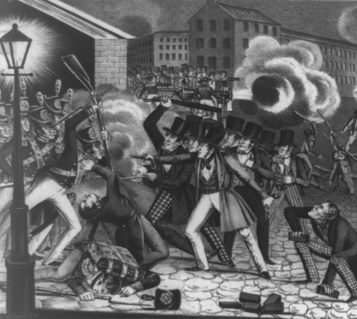
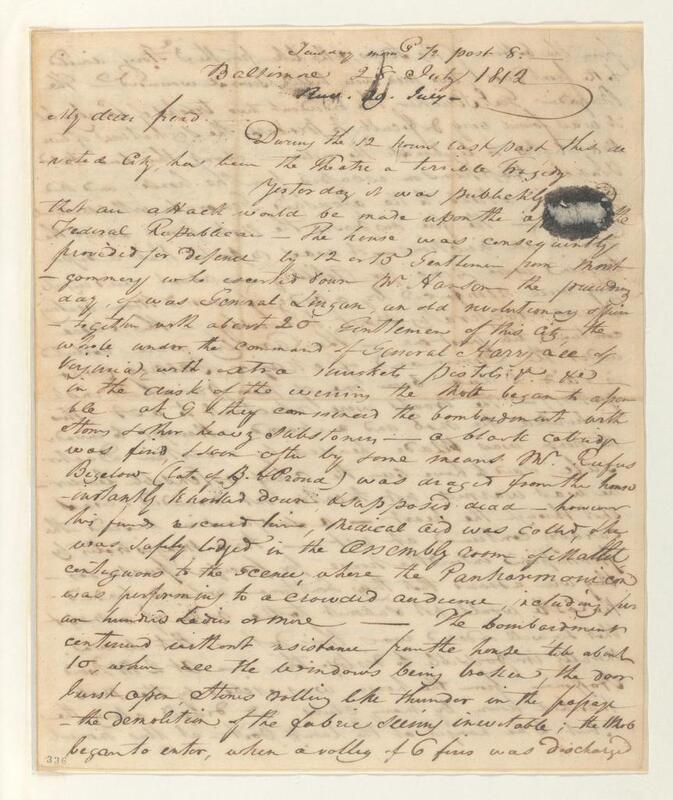
The Baltimore Riots are one of the lesser-known riots in Baltimore’s history. After James Madison’s war message against Great Britain on June 18, 1812, the Federal Republican newspaper printed an article against the President, stating that he was sending the nation to war without adequate funding, troops, ships, equipment, or defenses against the greatest naval power on earth. In reaction, a pro-war mob gathered and marched against the editorial offices of the newspaper. They were carrying hooks, ropes, axes, and clubs as they smashed the printing press and threw it into the street, along with paper and all other supplies and furniture. The mob attached the hooks and ropes to the building’s windows and roof and pulled the entire structure down. The riot spilled over into the docks and along the way, houses, wharves, and businesses were looted, and ships that people believed to carry British licenses had their sails and rigging slashed and destroyed. The two people that the mob were searching for: Jacob Wagner and Alexander Contee Hanson, managed to escape. By July 26, 1812, there was a second riot, when the pro-war mob found out where Hanson was being guarded by Gen. Henry “Light-Horse Harry” Lee and Gen. James M. Lingan. After almost 24 hours of negotiation, the men that were surrounded by the mob surrendered for safe passage to Gen. John Stricker, but once they came out of the house, they were attacked by the mob again and Gen. Lingan, a Revolutionary War hero, was killed. His death resulted in a martyrdom that allowed a Federalist sweep of the statehouse in Annapolis, though Republicans continued to hold Baltimore.
Mentioned in these documents